Remembering Howard Wolpe and looking ahead for the future of Burundi

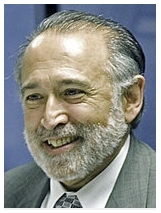
On October 25th, 2011, Howard Wolpe passed away. For those who did not have a chance to know him, I can tell you he was and still is the source of inspiration for many peacebuilders and practitioners, in Africa, in the United States, and elsewhere. A U.S. Congressman from 1978 to 1992, chairing the Africa Subcommittee during 10 of those years, he also served as Special Envoy to the African Great Lakes Region under President Clinton. He notably was the U.S. envoy to the Arusha peace talks that helped bring an end to the civil war in Burundi with the signature of the “Arusha Peace and Reconciliation Accords” in 2000. He then became the Director of the Wilson Center’s Africa Program where he launched with Steve McDonald a groundbreaking initiative: the Burundi Leadership Training Program (BLTP). This model inspired other peacebuilding initiatives in the Democratic Republic of Congo, in Liberia, in Timor-Leste and Afghanistan. In 2009, at the invitation of Secretary of State Hillary Clinton, he joined the State Department once more and reprised his role as Special Representative to the Great Lakes Region.
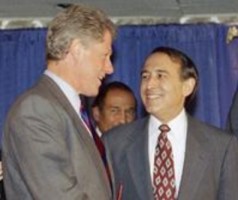
On October 25th, 2012, on the anniversary of Howard Wolpe’s passing, the International Crisis Group published its latest report on the situation in Burundi. The report is called Bye Bye Arusha?and my first reaction was to think of Howard and try to imagine his reaction. At first, I thought he would be disappointed to read these words, having done so much for the Arusha peace process. “Burundi is regressing”… what would he think about that? But this report is not just painting a dark picture of the current situation in Burundi; it is also a call for action. It stresses what seems to be a window of opportunity for Burundi. And I believe this is what would mostly get Howard’s attention. When we talk about post-conflict reconstruction and peacebuilding efforts, we are often asked how efficient these are, do they really make a difference? It is so difficult to measure the effect that peacebuilding programs really have on peace writ-large. What is even more difficult is to imagine what the situation would be in the country without these efforts.  This is something we should try to keep in mind. For those who know Burundi well, it is quite obvious that the situation would be even worse if nothing at all had been done. While there is a clear slide into targeted violence, training of militias across the border, no dialogue among parties and corruption, there are two major improvements that can certainly be attributed to peacebuilding efforts: the non-ethnic nature of discourse and conflict, and the professional behavior of the army nowadays while they had mostly led the intercommunal violence in the past. Some will argue it is again the idea of the cup half full and half empty… it is actually a little more than half full, and this is what can help us move forward.

Today, most of my attention is dedicated to peace education, a type of program that made Howard particularly hopeful for the future of Burundi. He was convinced that instilling a culture of peace, dialogue and non-violent conflict management among youth was essential for sustaining peace in the future. I had the great opportunity to be involved with the BLTP in the development of a conflict resolution curriculum for secondary schools in Burundi. At the request of the Burundian Minister of Education, through both the Wilson Center’s Africa Program and CMPartners, this initiative’s main goal was to complement efforts already underway within the Ministry to promote citizenship and human rights education through its national civic education curriculum. After a successful test, the Minister of Education endorsed the conflict resolution module and requested BLTP’s collaboration for the extension of the program to all secondary schools in Burundi, with the hope that it will be a robust asset to post-conflict reconstruction and the future of the country. From the outset, Howard Wolpe had tried to encourage the original donor of the BLTP program to support a program in the schools, a hope that he shared with the current President Pierre Nkurunziza, and, obviously, the Minister of Education. He would be delighted to see this dream coming closer to fruition.

While scholars agree on the importance of peace education, national school-based peace education programs are still rare in fragile states. Practitioners in this field are confronted with significant challenges in assessing the long-term impacts of such programs, especially in fragile contexts. Still, various scholars argue that peace education is a component of a child’s right to education and that the first fundamental recognition of peace education lies within the Universal Declaration of Human Rights – article 26 (2). The commitment of the United Nations to peace education has increased gradually over the years. As the principal U.N. agencies with a mandate for education and children, UNESCO and UNICEF are the most involved in peace education programs. The most recent sign of the UN’s commitment to peace education is the launch of its Education First initiative with US$1.5 billion secured commitments. This initiative places the promotion of Global Citizenship as one of its top three priorities. It implies “transforming the way people think and act;” giving Education a “central role in helping people to forge more just, peaceful, tolerant and inclusive societies;” and providing people with “the understanding, skills and values they need to cooperate in resolving the interconnected challenges of the 21st Century.” As Howard Wolpe thought, peace education is certainly only one aspect of the peacebuilding puzzle in Burundi and elsewhere, but it is a necessary one, and our field is more and more invested in the search for tangible evidence that will make this assertion harder to contest.
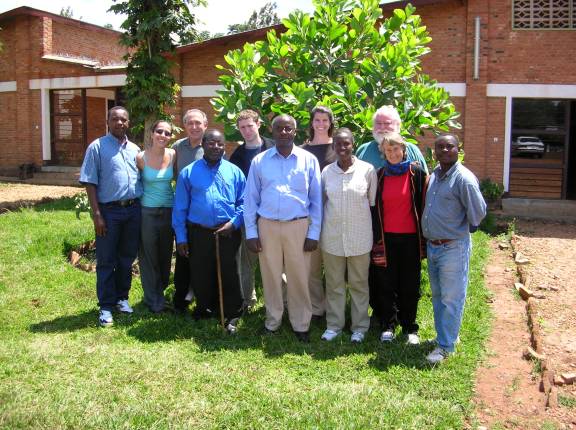
Howard Wolpe and the Burundi Leadership Training Program Team in May 2005

Posted in Africa, Education, Fragile States, International Development, Peace, Peace Education | Tagged , , , , , , , , , , , , , , , | Leave a comment

Minimum Standards for Child Protection in Humanitarian Action

The Global Protection Cluster officially launched new standards for child protection in humanitarian settings on October 29th, 2012.

Background: In some countries up to 1 child out of 4 suffers from abuse, exploitation, violence and neglect. Between 500 million and 1.5 billion children are estimated to experience violence annually; 150 million girls and 73 million boys worldwide are raped or subject to sexual violence every year; 115 million children are involved in hazardous work. In humanitarian settings, in addition to the pre-existing issues,  girls and boys are killed or injured, become orphaned, are separated from their families, are recruited into armed forces or groups, are trafficked or, worse, experience several of these at the same time.

In 2010 the members of the Global Child Protection Working Group agreed on the need for child protection standards in humanitarian settings. The Minimum Standards for Child Protection in Humanitarian Action were developed between January 2011 and September 2012.

Child protection in emergencies includes specific activities by child protection actors, whether national or community-based, and/or by humanitarian staff supporting local capacities. It also includes activities in other humanitarian sectors. The Minimum Standards therefore contain 26 standards: (a) 6 general standards to address child protection needs (b) 8 standards to ensure a quality child protection response (c) 4 standards to develop adequate child protection strategies and (d) 8 standards to ensure mainstreaming of child protection in other sectors.

The main purpose of the Minimum Standards is to:

  • Establish common principles amongst those working in child protection, and to strengthen coordination between them
  • Improve the quality of child protection programming, and its impact for children
  • Improve accountability within child protection work
  • Further define the professional field of child protection
  • Provide a synthesis of good practice and learning to date
  • Enable better advocacy and communication on child protection risks, needs and responses.

Implementation Strategy: Given the tremendous effort that has gone into drafting these Minimum Standards, it is important to ensure that due consideration is given to how these Minimum Standards will be promoted globally and how they can be applied in practice to humanitarian responses. This implementation plan outlined below serves as a road map to illustrate how the activities suggested to support the roll out of the Minimum Standards fit together to contribute to a greater goal and how the overall process can be monitored and evaluated. Click here to download the full implementation strategy.

Source: Global Protection Cluster

The Child Protection Working Group (CPWG) is the global level forum for coordination and collaboration on child protection in humanitarian settings. The group brings together NGOs, UN agencies, academics and other partners under the shared objective of ensuring more predictable, accountable and effective child protection responses in emergencies.

Posted in Child Protection, Education, Fragile States, Human Rights, International Development, Peace | Tagged , , , , , , , , , , | Leave a comment

The Global Gender Gap Report 2012: persisting gender gap divides

The Global Gender Gap Report 2012 has just been released: it emphasizes persisting gender gap divides across and within regions… Based on the seven years of data available for the 111 countries that have been part of the report since its inception, it finds that the majority of countries covered have made slow progress on closing gender gaps.

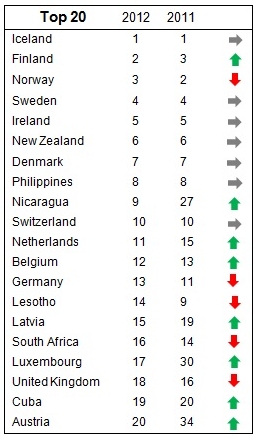
This year’s findings show that Iceland tops the overall rankings in The Global Gender Gap Index for the fourth consecutive year. Finland ranks in second position, overtaking Norway (third). Sweden remains in fourth position. Northern European countries dominate the top 10 with Ireland in the fifth position, Denmark (seventh) and Switzerland (10th). New Zealand (sixth), Philippines (eighth) and Nicaragua (ninth) complete the top 10.

The Global Gender Gap Report 2012 benchmarks national gender gaps of 135 countries on economic, political, education- and health-based criteria. The Global Gender Gap Index was developed in 2006, partially to address the need for a consistent and comprehensive measure of gender equality that can track a country’s progress over time. The index points to potential role models by revealing those countries that – within their region or income group – are leaders in dividing resources more equitably between women and men than other countries, regardless of the overall level of resources available. The index continues to track the strong correlation between a country’s gender gap and its national competitiveness. Because women account for one-half of a country’s potential talent base, a nation’s competitiveness in the long term depends significantly on whether and how it educates and utilizes its women.

The Global Gender Gap Report, introduced by the World Economic Forum in 2006, provides a framework for capturing the magnitude and scope of gender-based disparities around the world. The index benchmarks national gender gaps on economic, political, education- and health-based criteria and provides country rankings that allow for effective comparison across regions and income groups and over time.

The rankings are designed to create greater awareness among a global audience of the challenges posed by gender gaps and the opportunities created by reducing them. The methodology and quantitative analysis behind the rankings are intended to serve as a basis for designing effective measures for reducing gender gaps.

Download full report (PDF)      Country Highlights (PDF)

Global Gender Gap Index Data Analyser

Press releases: English | عربي I Español I Français I Deutsch I Português I 中文 I 日本語

Source: World Economic Forum

Posted in Human Rights, International Development, Women | Tagged , , , , , | Leave a comment

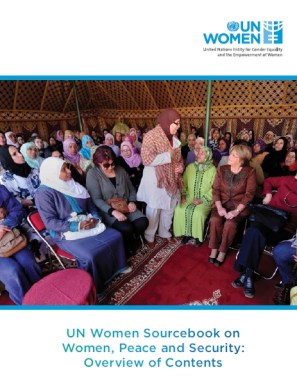
UN Women Sourcebook on Women, Peace and Security

Cross-posted from UN Women

This brief sourcebook is a collection of cutting-edge resources intended to raise awareness, provoke policy, support training, advocacy and share lessons learned on implementation of the women, peace and security (WPS) agenda, including the UN Security Council resolution 1325 and other women and peace and security resolutions (1820, 1888, 1889 and 1960).

This collection is expected to strengthen the knowledge base on women and peace and security-related issues and to provide practitioners, advocates and policy makers with practical guidance.

The Overview provides a detailed summary of issues, lessons learned, good practices and continuing efforts to implement the WPS agenda. It also provides a set of analytical and practical guidance on five major thematic and operational elements of the WPS agenda, namely:

  • frameworks for implementing the women and peace and security resolutions;
  • women’s engagement in conflict resolution;
  • gender-responsive conflict prevention and protection;
  • women’s participation in peacebuilding and recovery; and
  • gender and transitional justice.

For each of the areas highlighted, the subject matter is introduced with one or more analytical papers that offer the reader the opportunity to understand concepts, issues and the latest thinking on the subject. Guidance documents highlight practical examples, lessons learned and good practices, as well as recent statistics, where available.

The Sourcebook also includes the frameworks on WPS: UN Security Council resolutions 1325, 1820, 1888, 1889, and 1960.

This collection is expected to strengthen capacities at the country level and within the UN system to address issues and challenges relating to women and peace and security.

=> View/Download:

1. UN Women Sourcebook on Women, Peace and Security: Overview of Contents

2. Frameworks for Implementing the Women and Peace and Security Resolutions

3. Women’s Engagement in Conflict Resolution

4. Gender-Responsive Conflict Prevention and Protection

5. Women’s Participation in Peacebuilding and Recovery

6. Gender and Transitional Justice

7. Annexes

Posted in Fragile States, International Development, Peace, Peacebuilding, Women | Tagged , , , , , | Leave a comment

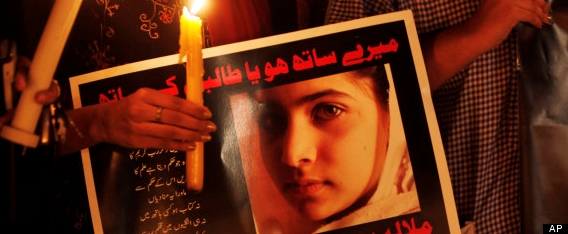
Stand with Malala on November 10th for girls’ education

The UN Special Envoy for Global Education declares November 10th a global day of action for Malala and 32 million girls more. On that day, one month following the assassination attempt, he will travel to Pakistan to deliver to President Zardari the million-plus petition to make education a reality for all Pakistani children and “let the world know that we will no longer accept keeping girls out of school.”

You can find out more and sign the petition by visiting www.iammalala.org.

Posted in Child Protection, Education, Fragile States, Human Rights, International Development, Peace, Women | Tagged , , , , , , , , , , , , | Leave a comment

650 million civilian arms: the global small arms and ammunition trade

Over 60 percent of all violent deaths are due to small arms and light weapons;
more than three quarters of the world’s small arms lie in the hands of
civilians, that’s over 650 million civilian arms

Small arms such as revolvers, assault rifles and light machine guns represent a multi-billion dollar industry. The Google Ideas initiative on illicit networks has created an interactive data visualisation of the global small arms and ammunition trade. The visualisation maps the arms trade giving us an invaluable understanding of who is selling and buying small arms and ammunition.

The tool was created by Google’s Creative Lab team in collaboration with the Igarape Institute; it includes over 1 million data points (provided by the Peace Research Institute Oslo) on imports and exports across 250 states and territories over an 18 year time scale.

See the Global Arms Trade Interactive Map – you can explore these data points by zooming in and out of the globe, clicking on any country to readjust the view, and using the histogram tool at the bottom to see trading patterns over the years. You can see, for example, that the scale of the global trade in ammunition rivals the scale of trade in actual weapons, an insight underexplored by policymakers today in conflict prevention and resolution.

Source: Google Blog & visionofhumanity.org

Posted in International Development, Peace, Peacebuilding | Tagged , , , , , , , , | Leave a comment

Supporting Teachers in Fragile and Conflict-Affected States – Brookings: new report & event

Teachers living in situations of armed conflict, forced displacement, and state fragility risk their lives to be on the frontlines of educating children. Often they are the only educators present, working in difficult and dangerous conditions with little or no support, sometimes without receiving a paycheck for months. Supporting the wellbeing of teachers is essential in any context, but it is particularly important for advancing education during and after violence and crises.

On October 30, the Center for Universal Education at Brookings (CUE) will host a discussion on the policies needed to support teachers working in fragile and conflict-affected states. The discussion will draw on findings from a new report by CUE and CfBT Education Trust, “Building Effective Teacher Salary Systems in Fragile and Conflict-affected States.”

Panelists will include: Anita Anastacio, senior technical advisor for education at the International Rescue Committee; Lori Heninger, director of the Inter-Agency Network for Education in Emergencies; Barbara MacDonald Moore, director of international programs at the Canadian Teachers’ Federation; and Brookings Senior Fellow Rebecca Winthrop, director of CUE. Yolande Miller-Grandvaux, senior education advisor at the U.S. Agency for International Development, will moderate the conversation.

Brookings Institution: Falk Auditorium / 1775 Massachusetts Avenue, N.W. / Washington D.C.

October 30, 2012: 1:30 PM – 3:00 PM EDT

Posted in Education, Fragile States, International Development | Tagged , , , , , | Leave a comment

The Missing MDG Target: Violence against Women

UN Women: Tragically, up to three quarters of women and girls worldwide experience physical or sexual violence in their lifetime.  And the effect on the millions of girls and women who are abused is devastating — not just on them personally, but also on their ability to fully participate in the development of their countries. Unless violence against women is curbed, meeting all of the eight Millennium Development Goals will be impossible.

Posted in Child Protection, Human Rights, International Development, Peace, Women | Tagged , , , , , , , | Leave a comment

Petition: “It’s Up to Us to Deliver for Malala,” UN Special Envoy for Global Education

UN Special Envoy for Global Education’s Petition:

“We call on Pakistan to agree a plan to deliver education for every child. We call on all countries to outlaw discrimination against girls. We call on international organizations to ensure the world’s 61 million out of school children are in education by the end of 2015.”

Posted in Child Protection, Education, Fragile States, International Development, Women | Tagged , , , , , , , | Leave a comment

A girl with a book…

Image

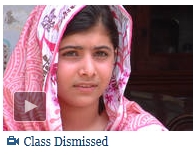
Still thinking of Malala Yousafzai in Pakistan, a schoolgirl recently shot by the Taliban after advocating education for girls in her blog… Hope she will recover. If you want to know more about her, you can take a look at this short 40-minute documentary (warning: some difficult content):

Posted in Child Protection, Education, Fragile States, Human Rights, International Development, Women | Tagged , , , , | Leave a comment