“Women Count” Security Council Resolution 1325: Civil Society Monitoring Report 2012

The Global Network of women Peacebuilders (GNWP), a program partner of the International Civil society Action Network (ICAN), is a coalition of women’s groups and other civil society organizations from Africa, Asia and the Pacific, South Asia, West Asia, Latin America, Eastern and Western Europe. Their work entails advocacy and action for the implementation of United Nations Security Council Resolutions (UNSCR) 1325 and 1820 on women and peace and security including the supporting resolutions 1888, 1889 and 1960 at the local, national, regional and international levels.

GNWP has just recently released its third report on Participation and UNSCR 1325, examining how adequate resources for implementation and monitoring of progress and results can be ensured.

Background: The 10th anniversary of UNSCR 1325 in October 2010 presented a critical opportunity to review and reflect on achievements as well as persistent gaps in implementation of the resolution. More importantly, it was an occasion to demand greater accountability and propose timely and relevant actions that Member States, the UN, civil society and other stakeholders should take to fully implement UNSCR 1325. Through its in-country and global monitoring 1325 project, initiated during the lead-up to the 10th anniversary, GNWP contributes to the call for greater accountability by all actors, particularly national governments. The project aims to build the capacity of women’s organizations in monitoring policy implementation; develop/identify indicatorsand benchmarks for monitoring progress and results of 1325 implementation; and conduct in-country monitoring from the perspectives of women’s groups and civil society.

Since 2010, the list of countries which have participated in the reporting include Afghanistan, Burundi, Canada, Colombia, The Democratic Republic of Congo (DRC), Fiji, Liberia, Nepal, Netherlands, Philippines, Rwanda, Sierra Leone, Spain, Sri Lanka, South Sudan, Sweden and Uganda. Furthermore, based on the findings and challenges raised in the reports, the project will continue to refine indicators as necessary; document best practices; cover positive trends and regressions; and uncover the effects of recent political developments at the national, regional and global levels.

The full 2012 report is available here:

Country reports: Afghanistan Colombia Democratic Rebublic of Congo Fiji Liberia Nepal Netherlands Philippines Rwanda Sierra Leone South Sudan Spain Sri Lanka Sweden Uganda

Source: Global Network of women Peacebuilders

Posted in Afghanistan, Africa, Peacebuilding, Women | Tagged , , , , , , , , , , , , , , , , , , , , , , , , | Leave a comment

Climate Change: “a 4 degree warmer world can, and must be, avoided”

The connections among environmental, health, and population dynamics and their links to conflict, human insecurity, and foreign policy are more and more studied by scholars, including the Wilson Center‘s Environmental Change and Security Program (ECSP). Hence, our interest in the new scientific report relased yesterday by the World Bank, Turn Down the Heat.

According to the report’s findings, the world is “barreling down a path to heat up by 4 degrees at the end of the century if the global community fails to act on climate change, triggering a cascade of cataclysmic changes that include extreme heat-waves, declining global food stocks and a sea-level rise affecting hundreds of millions of people.” All regions of the world would suffer – some more than others – but the report finds that the poor will suffer the most.

According to OECD recent report, Fragile States 2013, climate change and environmental degradation will affect fragile states more directly and severely than other countries—just as fragile states are least able to adapt due to limited human, technical and physical resources.

Turn Down the Heat is a snapshot of the latest climate science prepared for the World Bank by the Potsdam Institute for Climate Impact Research (PIK) and Climate Analytics, says that the world is on a path to a 4 degree Celsius[1] (4°C) warmer world by end of this century and current greenhouse gas emissions pledges will not reduce this by much.

A 4 degree warmer world can, and must be, avoided – we need to hold warming below 2 degrees,” said World Bank Group President Jim Yong Kim. Lack of action on climate change threatens to make the world our children inherit a completely different world than we are living in today. Climate change is one of the single biggest challenges facing development, and we need to assume the moral responsibility to take action on behalf of future generations, especially the poorest.”

The report says that the 4°C scenarios are potentially devastating: the inundation of coastal cities; increasing risks for food production potentially leading to higher under and malnutrition rates; many dry regions becoming dryer, wet regions wetter; unprecedented heat waves in many regions, especially in the tropics; substantially exacerbated water scarcity in many regions; increased intensity of tropical cyclones; and irreversible loss of biodiversity, including coral reef systems.

Full report can be downloaded here.

The Earth system’s responses to climate change appear to be non-linear,” points out PIK Director, John Schellnhuber. “If we venture far beyond the 2 degrees guardrail, towards the 4 degrees line, the risk of crossing tipping points rises sharply. The only way to avoid this is to break the business-as-usual pattern of production and consumption.”

The report notes, however, that a 4°C world is not inevitable and that with sustained policy action warming can still be held below 2°C, which is the goal adopted by the international community and one that already brings some serious damages and risks to the environment and human populations.

The world must tackle the problem of climate change more aggressively,” Kim said. “Greater adaptation and mitigation efforts are essential and solutions exist. We need a global response equal to the scale of the climate problem, a response that puts us on a new path of climate smart development and shared prosperity.  But time is very short.”

The World Bank Group’s work on inclusive green growth has found that with more efficient and smarter use of energy and natural resources opportunities exist to drastically reduce the climate impact of development without slowing poverty alleviation or economic growth.

While every country will take a different pathway to greener growth and balance their own need for energy access with energy sustainability, every country has green growth opportunities to exploit,” said Rachel Kyte, World Bank Vice President for Sustainable Development.

Those initiatives could include: putting the more than US$ 1 trillion of fossil fuel and other harmful subsidies to better use; introducing natural capital accounting into national accounts; expanding both public and private expenditures on green infrastructure able to withstand extreme weather and urban public transport systems designed to minimize carbon emission and maximize access to jobs and services; supporting carbon pricing and international and national emissions trading schemes; and increasing energy efficiency – especially in buildings – and the share of renewable power produced.

“This report reinforces the reality that today’s climate volatility affects everything we do,” Kyte said. “We will redouble our efforts to build adaptive capacity and resilience, as well as find solutions to the climate challenge.” 
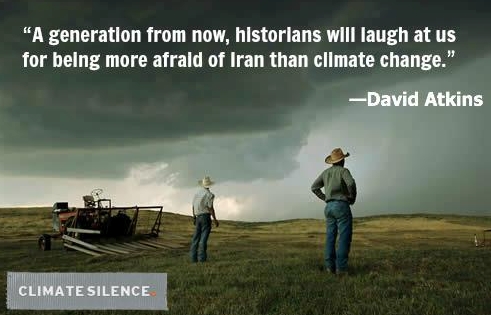
Turn Down The Heat: Why a 4°C Warmer World Must be Avoided summarizes a range of the direct and indirect climatic consequences under the current global path for greenhouse gas emissions. Key findings include:

  • Extreme heat waves, that without global warming would be expected to occur once in several hundred years, will be experienced during almost all summer months in many regions.  The effects would not be evenly distributed.  The largest warming  would be exptected to occur over land and range from 4° C to 10° C.  Increases of 6° C or more in average monthly summer temperatures would be expected in the Mediterranean, North Africa, Middle East and parts of the United States.
  • Sea level-rise by 0.5 to 1 meter by 2100 is likely, with higher levels also possible. Some of the most highly vulnerable cities are located in Mozambique, Madagascar, Mexico, Venezuela, India, Bangladesh, Indonesia, the Philippines and Vietnam.
  • The most vulnerable regions are in the tropics, sub-tropics and towards the poles, where multiple impacts are likely to come together.
  • Agriculture, water resources, human health, biodiversity and ecosystem services are likely to be severely impacted.  This could lead to large-scale displacement of populations and consequences for human security and economic and trade systems.
  • Many small islands may not be able to sustain their populations.

The report states that the science is unequivocal that humans are the cause of global warming, and major changes are already being observed. The global mean temperature has continued to increase and is now about 0.8°C above pre-industrial levels.

While a global warming of 0.8°C may not seem large, the report notes that many climate change impacts have already started to emerge, and the shift from 0.8°C to 2.0°C warming or beyond will pose much larger challenges.  But a global mean temperature increase of 4°C approaches the known historic level of change for the planet, which harks back to the last ice age when much of central Europe and the northern United States were covered with kilometers of ice and global mean temperatures were about 4.5°C  to 7°C lower. And this contemporary human-induced climate change, the report notes, is occurring over a century, not millennia.

Sources: The World Bank, Le Monde, OECD

Posted in Child Protection, Climate Change, Conflict Management, Fragile States, International Development | Tagged , , , , , , , , , , , | Leave a comment

Girls’ education in Afghanistan: 10 days left to support Razia’s Ray of Hope Foundation

Razia Jan with some of the girls who attend the school in Afghanistan she founded (Credit Image: © Press Photo)

Razia Jan, founder of the Ray of Hope Foundation in Afghanistan, was recentely Named Top 10 CNN Hero for 2012. Among these ten, the person with the most votes will be named “CNN Hero of the Year,” and receive a $250,000 grant to further his or work. If you want to support the Ray of Hope Foundation, please vote now, you can even vote several times a day! Online voting for “CNN Hero of the Year” runs through Wednesday, November 28, 2012, at Midnight PT:

Razia’s Ray of Hope Foundation is a nonprofit organization dedicated to improving the lives of women and children in Afghanistan through community-based education. Focused on the Afghan village of Deh’Subz, the organization was founded on the belief that education is key to positive, peaceful change for current and future generations. The foundation strives to provide opportunities to learn and grow in a safe, nurturing environment, empowering girls and women through education and resources so that they may work toward brighter futures — in their own villages and beyond.

After four years of efforts,  Razia Jan was finally able in 2008 to open a school in Afghanistan where girls can get a free education. The school has taken measures to protect the girls from would-be attackers. Many armed groups in the country oppose the idea of girls being educated. Despite the threat of violence, Jan continues to open the doors of her Zabuli Education Center, a two-story, 14-room building where 354 area girls are receiving a free education. The Zabuli Education Center teaches kindergarten through eighth grade. Without her school, Jan says, many of the students would not be able to receive an education. Seven small villages make up Deh’Subz, where the school is located. Though Deh’Subz is not Taliban-controlled, Jan has still found it difficult to change the deep-rooted stigma against women’s education.

On the evening before the school opened, four men paid her a visit. “They said, ‘This is your last chance … to change this school into a boys’ school, because the backbone of Afghanistan is our boys,’ ” Jan recalled. “I just turned around and I told them, ‘Excuse me. The women are the eyesight of Afghanistan, and unfortunately you all are blind. And I really want to give you some sight.’ ” Jan has not seen the men since. “You can’t be afraid of people,” she said. “You have to be able to say ‘no.’ Maybe because I’m old, the men are kind of scared of me, and they don’t argue with me.”

“After five years now, (the men) are shoulder to shoulder with me, which is such a great thing,” Jan said. “It’s unbelievable how much they are proud of the girls.”

Jan, who takes no money for her work with the school, believes the education her students receive will benefit not only future generations of Afghan women but the country as a whole. “My school is very small. It’s nothing big. But for this to start here, I think it’s like a fire. And I think it will grow,” she said. “I hope that one day these girls … will come back and teach, because I’m not going to be there all my life. I want to make this school something that will last 100 years from now.”

For more information, please visit Razia’s Ray of Hope Foundation website:

Sources: CNN, Razia’s Ray of Hope Foundation

Posted in Afghanistan, Child Protection, Education, Fragile States, Human Rights, International Development, Peacebuilding, Women | Tagged , , , , , , , , , , , , , , , | Leave a comment

“Why we have too few women leaders”

This TED talk is not recent, but it is still valid, unfortunately. Sheryl Sandberg (still the COO of Facebook) looks at why a smaller percentage of women than men reach the topof their professions, and offers 3 pieces of advice to women:

  1. Sit at the table
  2. Make your partner a real partner
  3. Don’t leave before you leave

Of course, this is a short talk and it does not address all the different possible factors that can explain this lack of top-level women leaders. This talk focuses on what women as individuals can do, of course there are also things that should be done at other levels. Some may also argue that it is simplistic and such a talk may actually increase the gap between men and women, but I hope this kind of talk can increase a mutual understanding, or at least start a constructive dialogue. What could be missing a little here is the discussion about the potential female vs. female dynamic. If you are interested to know more, here is the full talk:

Women systematically underestimate their own abilities. If you test men and women, and you ask them questions on totally objective criteria like GPAs, men get it wrong slightly high, and women get it wrong slightly low. Women do not negotiate for themselves in the workforce. A study in the last two years of people entering the workforce out of college showed that 57 percent of men entering, are negotiating their first salary, and only 7 percent of women. And most importantly, men attribute their success to themselves, and women attribute it to other external factors.”

A year later, The Huffington Post and TED decided to repost the talk and Sheryl Sandberg provided some insight on the experience: an article you can find here.

Sources: TED, The Huffington Post

Posted in Education, Human Rights, Women | Tagged , , , , , , , | Leave a comment

From Ignorance To Inclusion: Gender-Responsive Climate Adaptation in the Middle East And North Africa Region

Gender Action and the Heinrich Böll Foundation‘s newly released report exposes women’s persistent marginalization from climate adaptation projects. Across the MENA region, where women already suffer from social and political exclusion, climate change is expected to further exacerbate existing gender inequalities.

Despite this, the report finds that multilateral development investments have not prioritized gender-sensitivity in adaptation projects.

Based on in-depth gender analysis of all of the active multilateral climate change adaptation-related projects in the MENA region, the report finds that too often these investments view women as passive victims of climate change, ignoring their extensive expertise and agency in adaptation activities. This both compromises women’s human rights and undermines the effectiveness of climate smart projects. The report recommends that multilateral investments integrate gender dimensions and promote women’s involvement as leaders in climate change adaptation and environmental management. “From Ignorance to Inclusion” reinforces Gender Action and the Heinrich Böll Foundation’s efforts to promote women’s full, consistent and meaningful participation in climate change investments.

Full report: “From Ignorance to Inclusion: Gender-Responsive Multilateral Adaptation Investments in the Middle East and North Africa (MENA) Region” by Liane Schalatek, Heinrich Böll Stiftung North America, and Sarah Little, Sarah Bibler and Celine Salcedo-La Vina, Gender Action.

Executive Summary:

Sustainable use of its environmental resources is by many considered to be probably the most severe long-term development challenge for the Middle East and North Africa (MENA) region, which is also one of the regions of the world to be most severely affected by climate change. Yet despite a strong nexus between poverty as well social, political and economic exclusion and poor management of natural resources, governments in the region have not prioritized investments in the sustainable management of water resources and improvements in agricultural practices and productivity as the key to sustainable development. Nor has the region’s considerable oil wealth been used to build the governance and production structures needed for social and political equity and justice.

Women in the region, despite vast differences in their economic status, in particular have remained the societal group suffering from the most severe social and political exclusion despite important advances in improving their educational and health status. With climate change impacts expected to exacerbate existing inequalities and vulnerabilities, women in MENA countries due to the prevailing social and cultural norms in the region that deny them political, social and legal equality with men, are thus facing climate change impacts differently than men, with coping abilities and strategies that are local context-specific as well as gender-specific. Both local context and gender specificity need to be taken into account in projects and programs that deal with climate change impacts in the region and focus on reducing the vulnerability of nature and human systems to these impacts. This is important for domestic investment efforts – and there is no denying that governments in the region need to spend more on adaptation measures themselves –, but particularly also for bilateral and multilateral financing support by developed countries for the MENA region.

The gender analysis desk study reviewed nearly 150 active climate change adaptation relevant projects in the MENA region, managed or funded by 6 major multilateral funders that focus on climate change. These include the World Bank, the International Finance Corporation, the African Development Bank, the Climate Investment Funds, the Kyoto Protocol Adaptation Fund and the Global Environment Facility. By applying the OECD climate change Rio Markers to determine each project’s adaptation relevance, the authors identified 32 “adaptation relevant” active projects in the MENA region. Gender Action’s Essential Gender Analysis Checklist was then applied to each of these projects to systematically measure the extent of gender-sensitivity in multilateral climate change adaptation investments in the region.

This in-depth gender analysis reveals broad patterns related to gender sensitivity within adaptation projects in the MENA region. For example, regionwide projects tend to be more gender insensitive, while country-specific projects tend to exhibit greater gender sensitivity. Also, projects that conduct and incorporate a thorough gender analysis as an essential step in project design are more likely to achieve gender sensitivity throughout project implementation. Overall, climate investments view women as passive victims of climate change, ignoring their extensive expertise in adaptation and undermining the effectiveess of adaptation projects. Of the 32 reviewed projects, the analysis found that 53 percent were gender insensitive, 19 percent moderately gender sensitive, and only 28 percent gender sensitive. Eight examples of “best and worst practices” are provided to illustrate these broad findings. Given women’s and men’s distinct climate change adaptation roles, investments must proactively respond to differential gender needs. While projects should be designed to address specific gender dimensions of targeted populations in local contexts, and thus no two adaptation projects should be identical, some guiding principles that support gender rights and women’s empowerment within a wider human development context are particularly relevant to adaptation investments. To ensure that all climate change adaptation projects help and do not harm women, the authors recommend that these investments:

  • address adaptation strategies and gender issues synergistically;
  • incorporate gender-responsive results indicators, including sex-disaggregated data, into all projects;
  • reject the false notion of gender-neutral policies or projects;
  • incorporate gender analyses into all project designs that examine overlapping gender inequalities within the political, economic, and social context;
  • explicitly identify and redress gendered barriers to women’s equal project participation with men and proactively engage women as essential project participants throughout the project cycle.

Along with these principles, the study recommends important policy and project implementation steps that must be taken to ensure full, consistent and meaningful identification and engagement of gender issues in climate change adaptation investments. Multilateral institutions must establish and implement gender safeguard policies consistent with existing international conventions and instruments on gender equality in all adaptation projects. National governments and citizens in MENA recipient countries must hold multilateral projects accountable to implement their gender integration policies. Multilateral institutions must establish and implement gender safeguard policies consistent with existing international conventions and instruments on gender equality in all adaptation projects.

Source: Gender Action, AWID

Posted in Africa, Climate Change, Human Rights, International Development, MENA, Women | Tagged , , , , , , , , , , , | Leave a comment

“We Need The Voices of African Women” – Conversations with inspirational African women

Theo Sowa is Chief Executive Officer of the African Women’s Development Fund. In her TEDxChange talk, Theo Sowa talks about African voices and representation in conversations of international health and poverty issues. Theo argues that if we truly want to see progress in Africa and across borders, we need to invite the millions of African women who are leading change to the table. 

Published by the African Women’s Development Fund, Women Leading Africa: Conversations with inspirational African women is a collection of interviews with women leaders from Eastern, Western and Southern Africa. This first volume focuses on Politics, the Arts and Feminist Spaces and was edited by Nana Darkoa Sekyiamah.  These African women share their inspiration, thoughts and experiences on feminism, politics, peace building, leadership and the Arts. Nana Darkoa Sekyiamah talked to inspiring women such as Mary Wandia, Mercy Amba Oduyoye, Dr Musimbi Kanyoro, Jessica Horn, Leymah Gbowee, Florence Butegwa, Wanuri Kahiu, Ayesha Harruna Attah,Tsitsi Dangarembga, Rudo Chigudu, Bibi Bakare-Yusuf, Ama Ata Aidoo,Wendy Pekeur, Catherine Mabobori, Pregaluxmi Govender, Varbah Gayflor, Margaret Dongo, and Winnie Byanyima.

The African Women’s Development Fund (AWDF) is a grant-making foundation that supports local, national and regional women’s organisations working towards the empowerment of African women and the promotion and realisation of their rights. The AWDF is the first pan-African women’s grant-maker on the continent and since its inception has established itself as an innovative organisation at the cutting edge of social justice and women’s rights philanthropy in Africa.

The vision of the AWDF is for women to live in a world where there is social justice, equality and respect for women’s human rights. To this end, our mission is to mobilise financial,  human and material resources to support African women and the work of the African women’s movement to advance women’s rights and gender equality in Africa. We believe that if women and women’s organisations are empowered with skills, information, sustainable livelihoods, opportunities to fulfil their potential, plus the capacity and space to make transformatory choices, then we will have vibrant, healthy and inclusive communities.

Since the start of its operations in 2001, the AWDF has provided over $19 million in grants to 800 women’s organisations in 42 African countries. These groups include small women’s groups, regional organisation’s and emerging women’s funds, such as Women Peace and Security Network in Ghana: “AWDF has been that group that has stood by Women Peace and Security Network since we started…they gave us our first grant, but beyond that you rarely see donors who are concerned about the welfare of an institution, who are concerned about the little day to day things that are happening, who are concerned about the people who run the organisation so I say they walk the talk…the women who work there are fantastic…The Women Peace and Security Network has been in existence for 5 years, and for 5 years AWDF has stood by us.” Leymah Gbowee, joint winner of the 2011 Nobel Peace Prize.

From left to right: H.E. Bisi Adeleye-Fayemi (President and a co-founder of the AWDF), Ama Ata Aidoo (internationally acclaimed writer), Mercy Amba Oduyoye (Theologian) and Mary Wandia (Regional Programme Officer for the Open Society for Eastern Africa)

Sources: AWDF, TEDxChange

Posted in Africa, Fragile States, International Development, Women | Tagged , , , , , , , , , , , , , , | Leave a comment

One month later… Malala Day: a global day of action for Malala and girls’ education

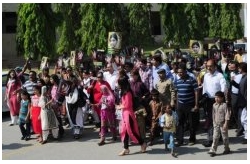
Pakistani students gather in Karachi on Saturday for ‘Malala day’. As Pakistan marked a global day of support for the teenager shot by the Taliban for promoting girls’ education, security fears in her hometown meant her schoolmates could not honour her in public.

A month to the day that Malala Yousafzai was attacked by the Taliban, simply for insisting that she go to school, we are celebrating Malala Day: a global day of action to support the estimated 32 million girls worldwide who are denied the right to go to school every day. Today, UN special envoy for global education, Gordon Brown, is in Pakistan to deliver a petition containing more than a million signatures, to President Asif Ali Zardari, urging him to make education a reality for all Pakistani children, irrespective of gender.

People around the world are expected to hold vigils and demonstrations honouring Malala and calling for the 32 million girls worldwide who are denied education to be allowed to go to school. Pakistani Prime Minister Raja Pervez Ashraf saluted Malala’s courage and urged his countrymen to stand against the extremist mindset that led to her attack. Still, such demonstrations of support will not be easy to conduct in Pakistan, security fears in Malala’s hometown mean her schoolmates can not honour her in public.

Indeed, in Mingora, the threat of further Taliban reprisals casts a fearful shadow, and students at Malala’s Khushal Public School were forced to honour her in private: “We held a special prayer for Malala today in our school assembly and also lit candles,” school principal Mariam Khalid told AFP. “We did not organise any open event because our school and its students still face a security threat.”

A Pakistani flood affected girl carries a photograph of child activist Malala Yousafzai to mark ‘Malala Day’ in Karachi on Saturday.

Despite the dangers, some children in Mingora were determined to speak out and pledged to follow Malala’s brave example: “Malala is a good friend of mine. She is brave and has honour and whoever attacked her did a terrible thing,” Asma Khan, 12, a student in Saroosh Academy, close to Malala’s school told AFP. “After the attack on her and her injuries, we have now more courage to study and now we will fulfil her mission to spread education everywhere.” Khan’s schoolmate Gul Para, 12, added: “Malala is the daughter of the nation and we are proud of her. She has stood by us and for our education up to now and now it is time that we should stand by her and complete her mission.”

Nearly 100,000 people have signed an online petition calling for Malala to be nominated for the Nobel Peace Prize.

Pakistani peoples carry photographs of child activist Malala Yousafzai to mark ‘Malala Day’ in Karachi on Saturday.

Still, a second teenage girl has been threatened with assassination in Pakistan
following the Taliban’s failed attempt to murder Malala Yousafzai. Hina Khan has been subjected to a series of chilling warnings and her family have appealed to the government for protection. Like Malala, Hina Khan is from Swat and has been campaigning for girls schools since she was 13. Now aged 17, she says nothing will stop her campaign and that she has been praying for Malala’s recovery. “Girls’ education is too important to give up on,” she said. “We always knew the risks and just hope the attack on Malala and the threats against me will turn more people against the extremists and force the government to act.” Hina’s mother, Farhat, said she was proud of her daughter’s stand and insisted that their campaign for women’s rights and girls’ education would not be silenced by threats. She said: “Of course there will be more problems now that we have gone public and talked about their threats but if we don’t fight then who will?”

The Education for All Global Monitoring Report 2012, published by UNESCO, confirms the scale of the task facing Pakistan. More than three million girls do not attend school – the second highest figure in the world. Human Rights Watch has recorded 96 reports on attacks against school so far this year.

Sources: The Guardian, France 24, The Telegraph, I am Malala

Posted in Child Protection, Education, Fragile States, Human Rights, International Development, Peacebuilding, Women | Tagged , , , , , , , , , , , , , | Leave a comment

Pedagogies for Peace in Post-Conflict and Fragile States

The United States Institute for Peace (USIP) recently hosted an important discussion around Pedagogies for Peace in Post-Conflict and Fragile States. If you were not able to attend, the video of this event is available on USIP’s website and here:

What kind of curricula promote the best education for  long-term peace in post-conflict, fragile and low resource contexts? Many kinds  of primary and secondary school curricula aim to promote social cohesiongreater tolerance and recovery from violence. But until recently we have had  little research on the different benefits of various curricula in different  types of conflict, or on how they can be used together most effectively, and on  whether these curricular approaches need to be sequenced temporally after  conflict, and if so, how.

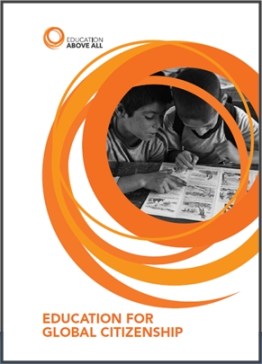
In May 2012, Education Above All, a Doha-based education  group, commissioned papers from practitioners and thematic experts  that map and analyze the most widely used of  these different curricula, collectively designated as “education for global  citizenship,”  and the policies that have  accompanied their implementation.  A  major finding of this research project   was that “transformative education for local, national and global  citizenship and peace CAN be implemented even under difficult conditions if  there is a policy commitment to do so.”  To explore this important issue, the project  director, technical adviser and expert on conflict and education, Margaret Sinclair, discussed  these research findings with experts from the U.S. Institute of Peace and the  Brookings Institution.

Presenter:

  • Margaret Sinclair, Technical Adviser to Education Above  All, Doha, Qatar “Education for Global Citizenship in Low-Resource and  Fragile Settings”

Respondents:

  • Jeff Helsing, Dean of Curriculum, Academy for  International Conflict Management and Peacebuilding, USIP
  • Xanthe Ackerman, Associate Director, Center for Universal  Education, The Brookings Institution
  • Qamar-ul Huda, Senior Program Officer, Religion and  Peacemaking Center, USIP

Moderator:

  • Lili Cole, USIP

Please find here the full report edited by Margaret Sinclair: Education for Global Citizenship in Low-Resource and  Fragile Settings

Source: USIP and Education Above All

Posted in Child Protection, Education, Fragile States, Human Rights, International Development, Peace Education, Peacebuilding | Tagged , , , , , , , , , , , , , , , , , | Leave a comment

UN Trust Fund to End Violence against Women

The United Nations Trust Fund to End Violence against Women (UN Trust Fund) today kicked off its 16th year announcing more than  US$8 million in grants to 12 local initiatives in 18 countries. In ten countries, funds will be used to address violence against women in conflict, post conflict and transitional settings, including Libya for the first time. Also for the first time, the Fund received significant support this year from countries in Africa, Latin America and the Arab States region, a testament to the growing mobilization to address violence against women globally. Today up to seven in ten women are targeted for physical and or sexual violence in their lifetime and 603 million women live in countries where domestic violence is still not considered a crime.

The UN Trust Fund to End Violence Against Women is a testimony to the global consciousness that violence against women and girls is neither inevitable nor acceptable. The UN Trust Fund is a leading global grant-making mechanism exclusively dedicated to addressing violence against women and girls in all its forms. It supports effective initiatives that demonstrate that violence against women and girls can be systematically addressed, reduced and, with persistence, eliminated. To date, the UN Trust Fund has delivered more than USD 78 million to 339 initiatives in 127 countries and territories.  Established by UN General Assembly resolution 50/166 in 1996 and administered by UN Women on behalf of the UN system, the UN Trust Fund works with non-governmental organizations, governments and UN country teams to:

  • Prevent violence against women and girls by empowering groups especially at risk of violence, including adolescent girls and indigenous or ethnic minority women, and engaging strategic groups such as youth, men and boys, and traditional and faith-based leaders in prevention efforts;
  • Expand the access of women and girl survivors of violence to services including legal assistance, psychosocial counseling, health care, and building the capacity of service providers to respond effectively to the needs of women and girls affected by violence;
  • Strengthen the implementation of laws, policies and action plans on violence against women and girls through data collection and analysis, building capacities of service providers and strengthening institutions to become more effective, transparent and accountable in addressing violence against women.

By supporting actions where they matter most, the UN Trust Fund is uniquely placed to meet the most urgent needs of women and girls and their communities. The programs supported by the UN Trust Fund also contribute directly to the advancement of the goals of the UN Secretary-General’s UNiTE to End Violence against Women campaign on the ground. The UN Trust Fund grants are awarded annually through an open, transparent process that ensures quality programming and rigor in the selection of grantees. The grant-making process is highly competitive. For instructions on how to apply, please consult the Application Guidelines. If you have questions, please contact the UN Trust Fund Secretariat.


Publications | Grantees | Application Guidelines | Partners | News & Stories

Source: UN Women

Posted in Child Protection, Fragile States, Human Rights, International Development, Peace Education, Peacebuilding, Women | Tagged , , , , , , , , , , | Leave a comment

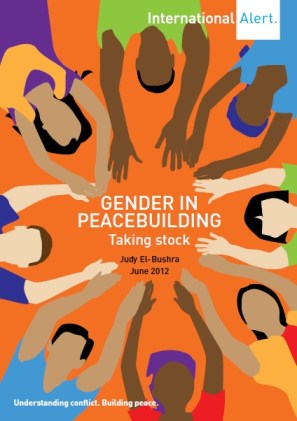
Gender in Peacebuilding: new International Alert report

To be effective, peacebuilders need to respond to the power dynamics and norms that influence peace and violent conflict at the household, community, national and international levels.

This means that they need to be aware of the diversity of gender and other identities among men and women. To help the field better understand and act more effectively, International Alert is carrying out a three-year research project exploring the role of gender in peacebuilding.

The new report, Gender in peacebuilding: taking stock, reflects the findings of the preparatory stage of this project. The two main activities undertaken in this first phase were: a series of workshops in Burundi and Nepal, which explored how practitioners, government representatives and donors viewed the issues; and a review of current literature relevant to the roles of men and women, and of gender relations, in violent conflict and peacebuilding.

In the report, three approaches to gender in peacebuilding are identified:

  • Gender-blind, which is the assumption that what works for people in general, works for both men and women, and that there is no need to distinguish between them.
  • UN Security Council Resolution 1325, the central tenet of which is that women are more vulnerable than men and more marginalized from decision-making. Thus, interventions are required which counteract this tendency, making women’s protection, promotion and participation explicit goals of all activities, as required by the resolution.
  • Gender-relational, a hitherto unexplored approach which is based on a strategy of benefit-sharing and solidarity-building between men and women, and uses a context-specific gendered power analysis as its starting point. Underpinning this analysis is a critical review of socialization mechanisms – as they relate to both men and women – within major societal institutions where gender relations are reproduced, such as the household, the school, the state and religious systems.

Based on this analysis, Gender in peacebuilding suggests possible activities based on a gender-relational approach. These include developing dialogue between men and women for addressing violence against women, or for dealing with vulnerabilities experienced by men that are often overlooked – for example as victims of sexual violence or as potential recruits into militias or gangs. The presumption here is that men and women will equally contribute to, and benefit from, this relational approach and that it will avoid the risks of backlash and male alienation, which are sometimes incurred by women-focused initiatives.

In the remaining two years of the research, International Alert will explore the validity of the gender-relational approach as an effective strategy for analyzing conflict and for designing peacebuilding interventions.

Cross-posted from: International Alert

Posted in Fragile States, International Development, Peacebuilding, Women | Tagged , , , , , , , | Leave a comment